
If you’ve dealt with a stubborn roof leak, you know the frustration. You patch one spot, and a month later, water finds a new way in. For many property owners, the cycle of “bandage repairs” is exhausting and expensive. That’s why EPDM – and especially Liquid EPDM – offers a breakthrough solution for flat and low-slope roofs, delivering lasting, reliable protection that breaks the cycle.
Whether you manage a warehouse, a backyard shed, or an RV that’s seen better days, using a high-quality butyl roof coating transforms your maintenance strategy. At EPDM Coatings, we’ve seen the right material end decades of roof problems with long-term, reliable protection.
What Exactly Is EPDM? (And Why the Liquid Version is a Game Changer)
EPDM stands for Ethylene Propylene Diene Terpolymer. In plain English, it’s a high-performance synthetic rubber. Traditionally, you’d see this installed in big, heavy black sheets that get glued or weighted down.
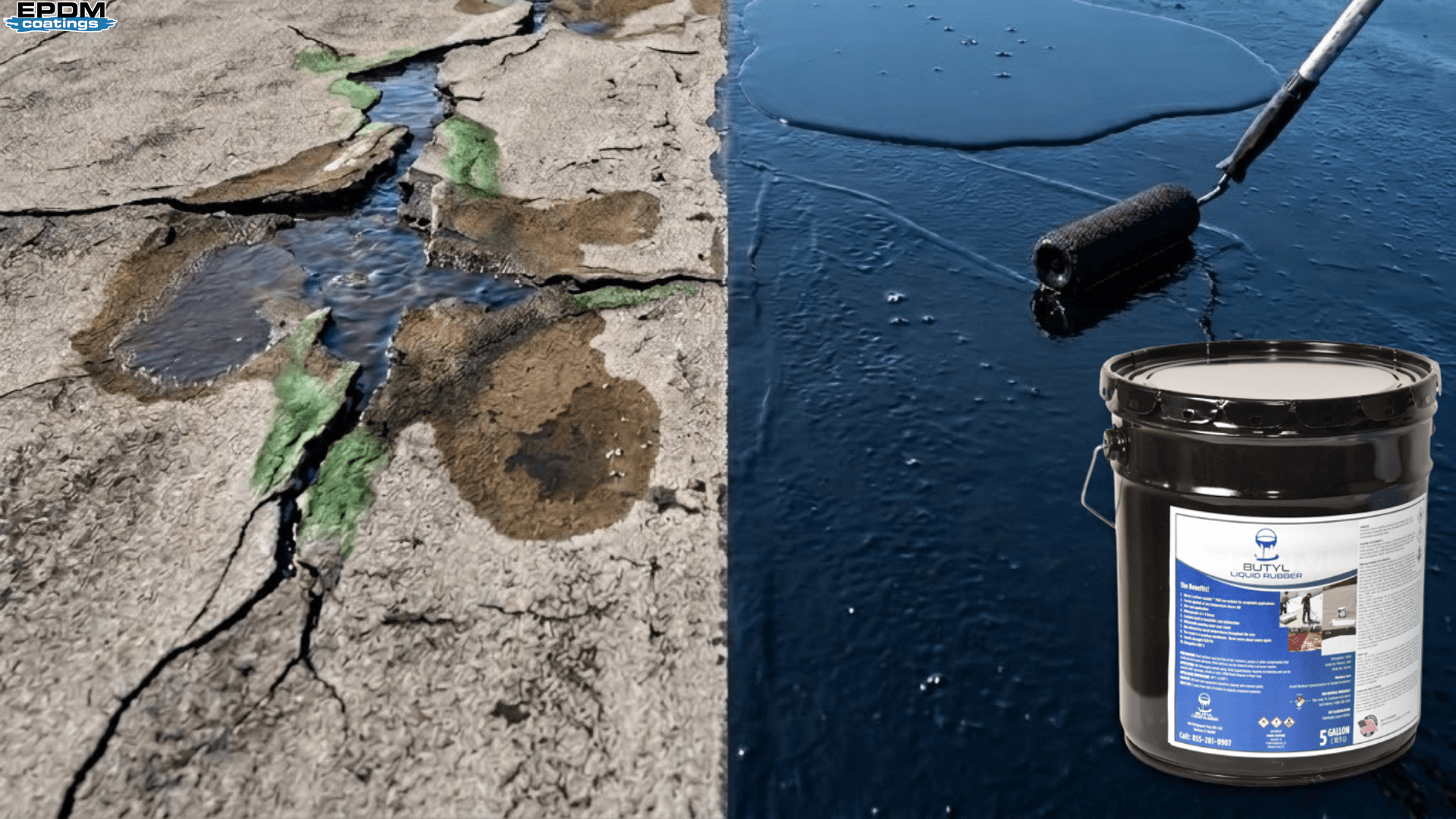
The “Liquid” version – often called liquid butyl rubber – uses the same chemistry to make it brushable. Imagine turning a solid tire into a liquid and painting it over your roof. Once it dries, it fuses to the surface, becoming part of the roof rather than just sitting on top.
Why Seams are the Enemy
Most roof failures don’t happen in the middle of a panel; they happen at the seams. But with a liquid butyl roof sealant, you get a seamless, watertight membrane – no gaps, no joints, nowhere for water to sneak through. This dramatically reduces leak risk.
The Real-World Benefits of Liquid Butyl Roof Coating
We get asked all the time: “Why shouldn’t I just buy a cheap acrylic coating from a local hardware store?” The answer is simple: liquid butyl rubber beats acrylic in durability, temperature resistance, and long-term reliability. These three benefits make all the difference.
1. Our Liquid BUTYL Rubber loves ponding water
Many roof coatings, especially water-based ones, eventually break down if water sits on them too long. Liquid butyl rubber is specifically formulated to withstand standing water 365 days year-round, providing reliable, long-lasting protection for any flat roof area where water pools.
2. Extreme Flexibility (The 500% Rule)
Buildings move. They settle, expand in summer heat, and contract in winter cold. If your roof coating is stiff, it will crack. Our Liquid Butyl Rubber flexes up to 500% – stretching like a giant rubber band and snapping back – so it maintains protection as metal roofs shift.
3. UV and Ozone Resistance
The sun is a powerful UV radiator that cooks most roofing materials, making them brittle. EPDM is built with natural, long-term UV protection – no extra top coats needed. Your roof stays flexible and protected under intense sunlight and harsh ozone.
Breaking Down the Costs: Repair vs. Replace
When reviewing costs, a complete roof tear-off is daunting. You pay for demolition, disposal, insulation, and highly skilled labor. For a standard commercial roof, this is a major capital expense.
The Restoration Alternative
Using a butyl roof coating often allows you to skip the tear-off entirely.
- One-Coat System: Most products require multiple coats and drying times. Our system needs just one application, saving about 50% on labor.
- Long-Term ROI: One application extends your roof’s life by 18-20 years. Spread out over two decades, it’s one of the most cost-effective ways to safeguard your building against leaks and expensive repairs.
The “DIY-Friendly” Installation Guide
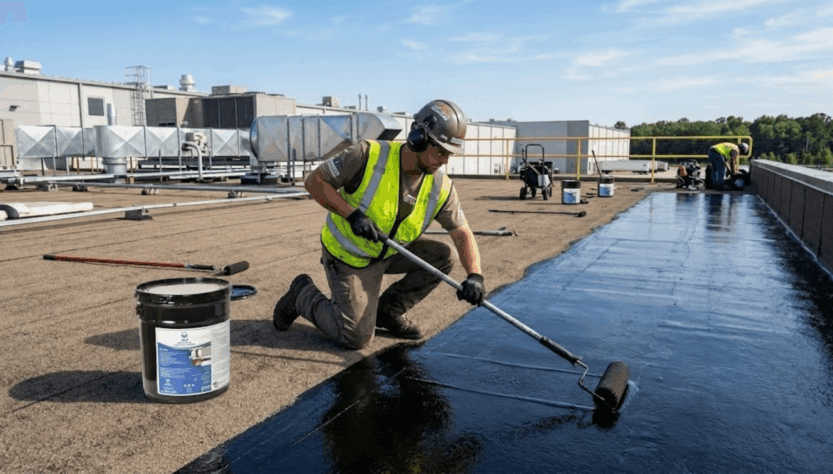
You don’t need expensive machinery for Liquid EPDM. If you can use a paint roller, you can seal a roof.
Step 1: Prep Like a Pro
Just as you wouldn’t paint a dirty car, clean your roof first. Use a pressure washer to remove dirt, grease, and chalking from any old coatings. Wire-brush rusted metal spots for a clean, dry, stable surface.
Step 2: Patch the “Trouble Spots”
Before you roll out the whole roof, take a brush and some rubber roof sealant and go around the vents, chimneys, and AC units. These areas are most likely to leak, so give them extra attention first.
Step 3: Mix and Pour
Liquid Butyl Rubber is mixed with a catalyst using a power mixer. Apply it promptly after mixing.
Step 4: Roll It On
Use a medium nap roller for a thick, even coat (about 20 mils). The solvent-based formula levels itself, filling small cracks and pits.
Now that you know the steps to apply it, where exactly can this product be used? Here’s what to consider.
Versatility is where this product shines. With chemical bonding power, it seals and protects: Metal: Stops rust instantly and seals all screw holes.
- Weathered EPDM: It rejuvenates old, dried-out rubber sheets.
- Fiberglass: A favorite for RV owners who want a “forever roof.”
- TPO/Hypalon: Perfect for aging single-ply roofs that are starting to show their age, usually 5 or more years old.
- Karnak asphalt exterior coating (be sure to remove any loose material first)
- PVC – Please visit our high volume Silicone product page.
- Grace Ice and Water Shield.
- Acrylic Sheet and any acrylic based product.
- Weathered Vinyl
- (Aged) Polyurethane Foam
- Torchdown.
- Tar and Gravel.
- Modified & BUR roofs.
- Concrete, where there is little foot traffic (Consider Moisture Test. If moisture is present bubbling may occur)
We’ve covered the essentials – so is using Liquid Butyl Rubber worth it for your property? Let’s bring it all together.
Roofing isn’t the most “exciting” topic until your ceiling starts dripping on your equipment or furniture. At that point, it becomes the only thing that matters.
Choosing a butyl roof sealant is more than stopping a leak – it ensures you have peace of mind for up to twenty years. At EPDM Coatings, we’ve helped everyone from homeowners to NASA engineers achieve dependable, long-term roof protection with a formula that delivers results.
Liquid Butyl Rubber is so versatile that it can easily be applied to metal, rubber, fiberglass, concrete, Hypalon TPO, BUR, foam, and many other surfaces.